
Four battery-electric articulated dump trucks, described as the largest of their type currently in production, have begun work on the Lower Thames Crossing in Essex.
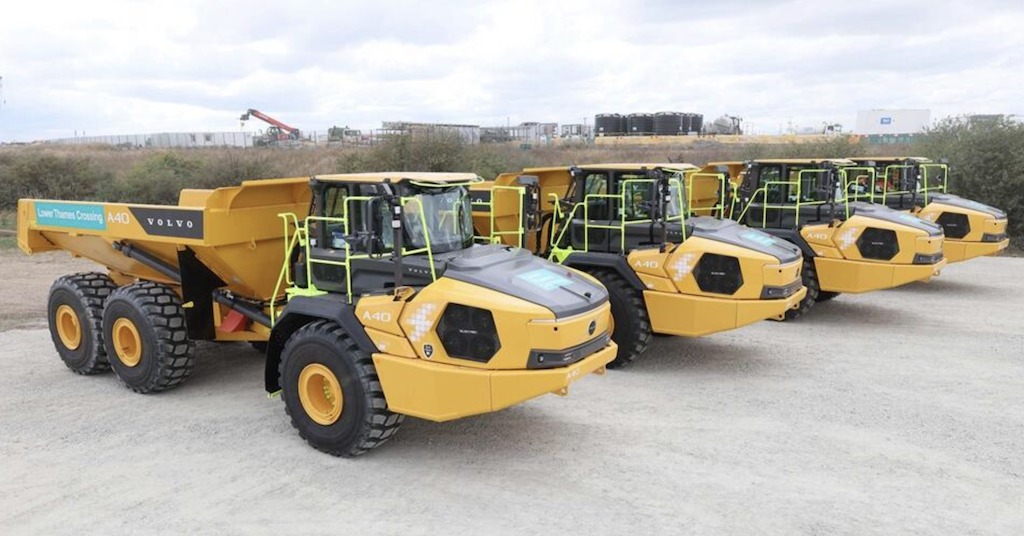
image: Volvo
The Volvo A40 Electric haulers are the first battery-powered machines in their size category to be deployed on a construction site anywhere in the world. Each has a payload capacity of up to 39t and is being used in the construction of the foundations and structures of the new road and tunnel entrance near East Tilbury.
The machines are being operated by Bouygues Travaux Publics Murphy Joint Venture (BMJV), which is responsible for delivering the tunnels and approaches section of the project. They were supplied by SMT GB, the UK dealer for Volvo Construction Equipment, which will also provide ongoing support.
Each truck is equipped with a 540kWh battery and regenerative braking technology, which recovers energy during operation. They are charged using electricity generated on site by generators powered by British-produced green hydrogen.
According to National Highways, the machines produce no exhaust emissions and generate less noise and vibration than their diesel equivalents. Their charging arrangements have been integrated into site working patterns, with charging taking place during breaks and in the evening.
Despite higher initial purchase costs, National Highways expects the electric vehicles to be cheaper to operate over their working lives than diesel and hydrotreated vegetable oil (HVO) alternatives. Lower electricity costs and reduced maintenance requirements are expected to offset the initial investment.
The deployment forms part of the Lower Thames Crossing's ambition to become the first major infrastructure project in Britain to achieve carbon-neutral construction.
Diesel has not been permitted on the project's construction sites since 2025, with machinery and equipment powered by electricity, hydrogen and HVO. More than 30 zero-emission machines were already operating across sites in Kent and Essex in September, including excavators, rollers, tractors and telehandlers.
National Highways expects the fleet to grow to approximately 150 machines by peak construction in 2028, potentially making it one of the largest deployments of low-emission construction equipment on an infrastructure project anywhere in the world.
Shaun Pidcock, Lower Thames Crossing programme director, said the deployment demonstrated that electric machinery could undertake heavy construction work without compromising on size, power or productivity.