
The £1.5bn-plus A66 Northern Trans-Pennine upgrade will be delivered over nine years rather than the five originally planned, the government confirmed in the Budget, with main construction due to begin in November.
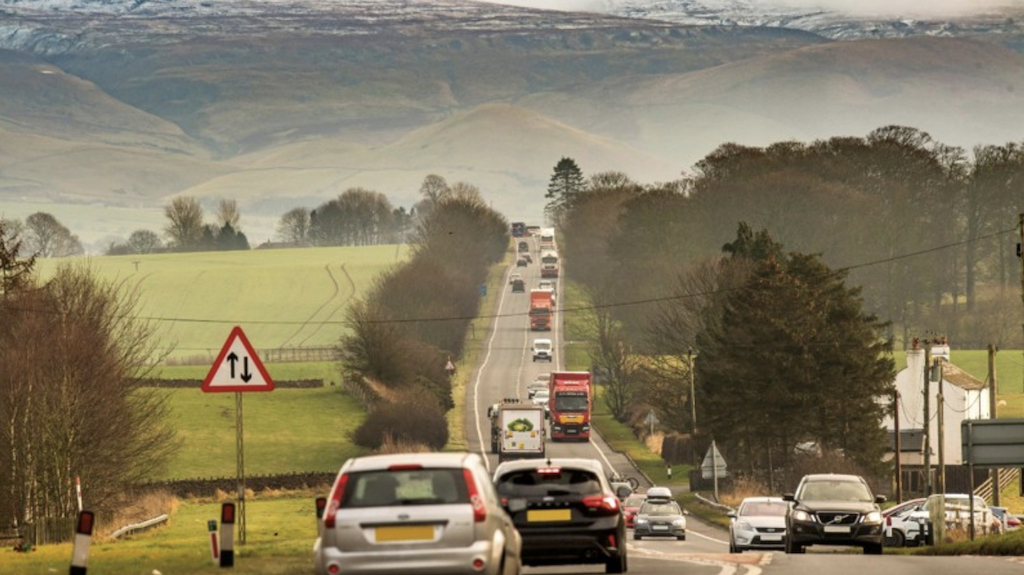
image: National Highways
The scheme will be delivered by Balfour Beatty, Kier and Aureos, the infrastructure services business formerly known as Keltbray Infrastructure Services.
The project will create a continuous dual carriageway along the 50-mile route between the M6 at Penrith and the A1(M) at Scotch Corner. It includes dualling around 18 miles of remaining single carriageway, improvements to key junctions and new bypasses intended to improve safety, journey reliability and freight connectivity between the North-East and North-West of England.
The revised timetable follows the government’s approval of the project’s full business case on 22 October. According to the Yorkshire Post, Roads minister Justin Madders told North Yorkshire Council leader Carl Les that phasing the work over nine years would keep the project affordable and align construction with available funding. The government has not published a revised total cost or a definitive completion date for the entire scheme, although the full route is expected to be upgraded by 2035.
Construction will begin on the western section between Penrith and Temple Sowerby in Cumbria, which is expected to open by 2031. Preparatory work, including archaeological investigations and utility diversions, will continue on the eastern sections until 2030, with main construction there expected to start in that year. Improvements at Scotch Corner are scheduled within the current road investment period, which ends in March 203.
National Highways says the upgrade will improve road safety, reduce congestion and provide more reliable journeys on a route that carries a high proportion of freight traffic. Heavy goods vehicles account for about a quarter of traffic on the A66, more than twice the national average for a road of this type.
The scheme received development consent in March 2024, following a lengthy planning process and a legal challenge.