
Alchera raises £2.7m to expand AI transport data platform
Cambridge-based transport technology company Alchera Technologies has raised £2.7m in seed funding to develop its artificial intelligence platform and expand its work with local authorities and highways operators.
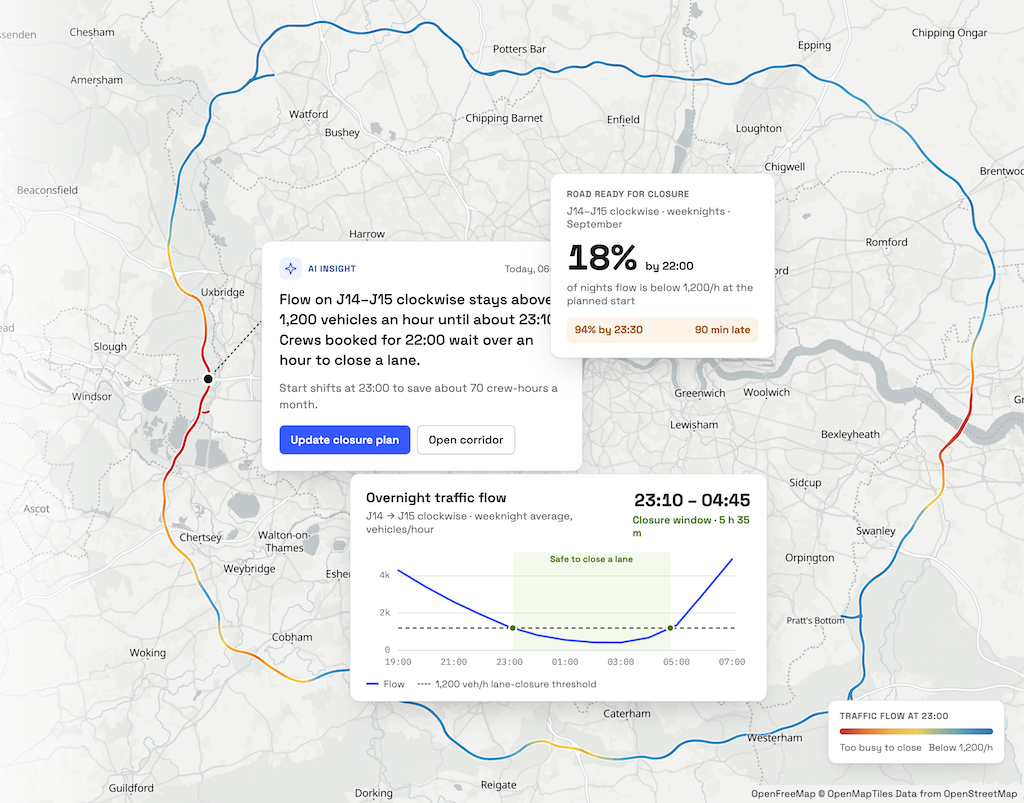
image: Alchera
The funding round includes a £2m investment led by Maven Capital Partners through the British Business Bank’s South West Investment Fund, alongside investment from the Bayes Entrepreneurship Fund and The FSE Group. Innovate UK provided a further £700,000 in match funding through its Investor Partnerships programme, with existing investor Cambridge Applied Research also participating.
Founded in 2016, Alchera develops software for transport planning and operations, including road network analysis and bus service performance monitoring.
Alchera’s software combines transport data from sources including traffic signals, vehicle movements and bus locations with contextual information such as weather and air quality. Machine learning is used to identify patterns, assess network performance and forecast traffic conditions, helping transport authorities make decisions about roadworks, bus services and infrastructure maintenance.
The company says its platform can reduce the time required to analyse transport data from weeks to seconds. One application supports roadworks planning on the M25 by forecasting traffic flows up to 24 months ahead. In Lancashire, the platform analyses more than 300 junctions and 85,000 network links to help identify bus network performance issues and inform investment decisions.
The new funding will support product development, particularly in engineering, and help the company deploy its technology to more customers. Alchera works with local and regional transport authorities, highways operators and their advisers.
Anna Jordan, co-founder and chief executive of Alchera Technologies, said transport data was often fragmented across different systems and organisations, slowing decisions that affect journeys and network performance.
The investment comes as transport authorities face pressure to manage ageing infrastructure, changing travel patterns and constrained budgets. Better use of existing data is one approach to improving network planning and targeting investment, although the benefits depend on the quality of the underlying information and how effectively insights are applied.