
Government allocates £3m to boost bus franchising
The UK government has announced additional funding to support the six mayoral authorities in moving towards bus franchising, as part of its wider programme of bus reform aimed at improving services, expanding routes and making fares more affordable for passengers.
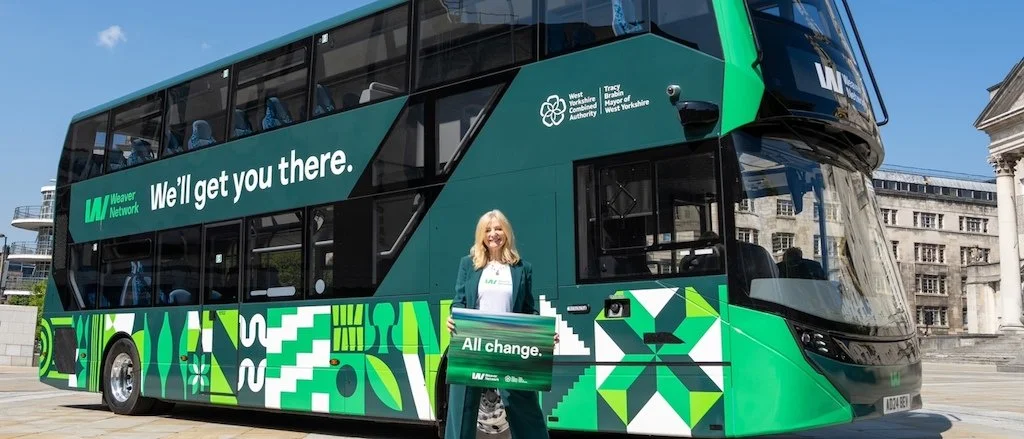
image: WYCA
According to Department for Transport, a £3m funding package will be shared between Liverpool City Region, North East, West Yorkshire, South Yorkshire, West Midlands, and Cambridgeshire and Peterborough combined authorities to help them establish franchised bus networks. The funding is intended to support local leaders in designing and implementing systems where public authorities set routes, timetables and fares, while private operators are contracted to run services under agreement.
Bus franchising has been a central element of recent UK transport policy, particularly in metropolitan areas, where local leaders have argued it can improve coordination between services and allow for more consistent standards across networks. The approach has been most prominently implemented in Greater Manchester’s Bee Network, which is being used as a reference model for other regions considering similar systems.
The government’s wider bus strategy also includes long-term investment commitments through local transport funding streams, alongside policy work aimed at improving integration between different modes of transport, including buses, rail and active travel.
The government said the support forms part of what it has described as a “bus revolution”, building on existing investment in fare caps, discounted travel schemes and the introduction of new routes in some areas, particularly rural communities. It added that franchising is intended to give local authorities greater control over bus networks, allowing services to be shaped around local demand and priorities.
Roads and Buses Minister Simon Lightwood said the funding would help local leaders take “a step closer to franchising”, describing it as part of efforts to improve reliability and expand access to bus services. He said the approach would allow mayors and combined authorities to take a more direct role in shaping local transport networks.
The Urban Transport Group, which represents transport authorities in major UK cities, welcomed continued investment in bus services and said that local areas were increasingly focused on creating more integrated and affordable networks. Jason Prince, Director of the Urban Transport Group, said “Buses are the backbone of our public transport system. Local areas are investing in bus services like never before, with mayoral combined authorities leading the way in making their bus networks affordable, accessible and integrated. This £3m funding boost, together with the new Bus Service Act, will unlock the future of bus reform and see local passengers and communities benefit from better bus services.
Passenger advocacy group Bus Users UK also said that investment in services and fare initiatives is helping to improve access to education, employment and essential services for passengers who rely on buses. CEO Lydia Horbury said, “Buses are a lifeline for millions and putting passengers at the heart of the network is the only way to ensure these services truly thrive. This investment is a positive step toward creating a more integrated and affordable transport system that works for the people who use it every day.
“Whether it is a young person in Barnsley accessing education for free or a resident in a rural Norfolk village finally being connected to their local community, seeing local leaders use this funding to break down barriers is incredibly welcome.”