
Report highlights economic benefits of expanding Eurostar's cross-border rail network
Expanding international high-speed rail services from the UK could generate billions of pounds in additional economic activity and support tens of thousands of jobs over the next decade, according to a new report examining the wider economic impact of Eurostar's operations.
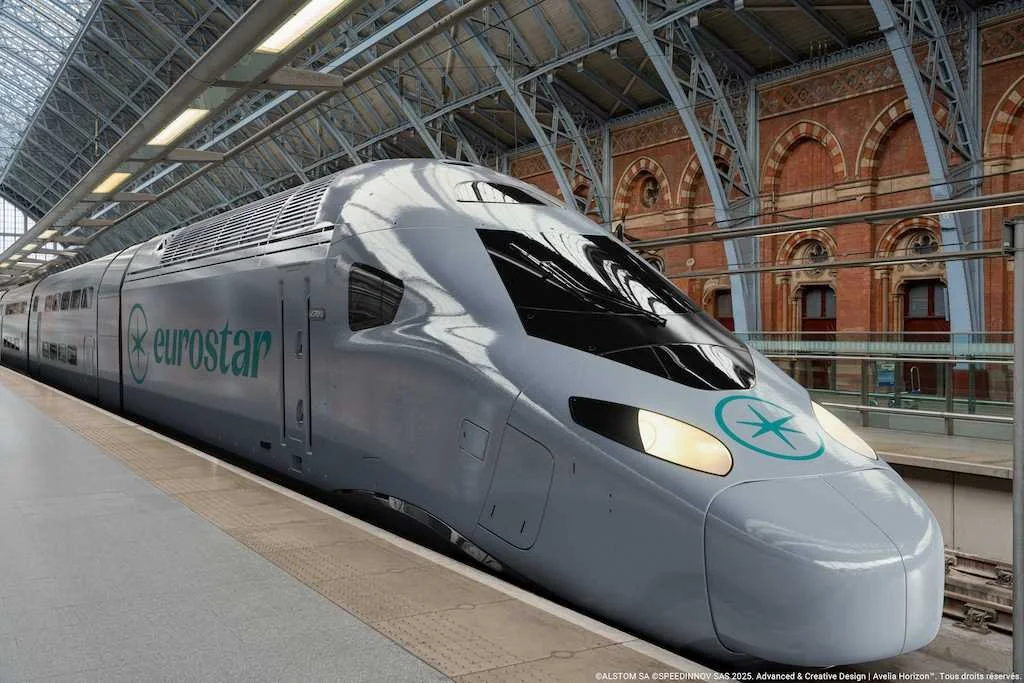
image: Eurostar
The report, Eurostar 2025 Impact Report, was produced by Public First, an independent research and public policy consultancy that specialises in economic analysis, opinion research and policy evaluation for organisations across the public and private sectors.
Using economic modelling, the report estimates that Eurostar currently supports almost £2bn in gross value added (GVA) to the UK economy each year and approximately 23,000 jobs through its direct operations, supply chain activity and wider spending by employees and visitors. It suggests that, with expanded international rail capacity and improved infrastructure, this contribution could increase to £2.7bn in annual GVA and support more than 40,000 jobs by 2035.
The analysis argues that expanding cross-border rail services would deliver economic benefits beyond the rail sector by improving business connectivity, supporting tourism and encouraging investment. Faster and more frequent international rail links are expected to strengthen trade and commercial relationships between the UK and mainland Europe while making a wider range of European destinations accessible by direct rail.
According to the report, improved connectivity would increase visitor spending in hotels, restaurants, retail and cultural attractions, while businesses could benefit from easier access to customers, suppliers and skilled workers. The report also highlights productivity gains associated with rail travel as passengers are generally able to work during journeys more easily than when travelling by air.
The report concludes that achieving this level of growth will depend on investment in infrastructure, particularly at London St Pancras International, where passenger processing capacity is viewed as a constraint on future expansion. It also points to the need for coordinated planning between government, infrastructure managers and rail operators to accommodate additional services and potential new market entrants.
Eurostar has announced plans to invest in a new fleet of high-speed trains capable of supporting additional routes and higher passenger numbers during the 2030s. The operator has identified destinations including Frankfurt and Geneva as potential future direct services, subject to infrastructure and regulatory requirements. The company has set a long-term objective of increasing annual passenger numbers from around 20m to 30m over the next decade.
The report presents the economic case for expanding international rail links at a time when competition on cross-Channel passenger services is expected to increase. Its findings suggest that investment in capacity and connectivity could have wider benefits for the UK economy, provided supporting infrastructure keeps pace with growing demand.