
Research highlights widespread public transport accessibility barriers
A new report from the Institution of Mechanical Engineers suggests that public transport across the UK is leaving millions of disabled and older people effectively “locked out” due to inconsistent accessibility and structural barriers in services and infrastructure.
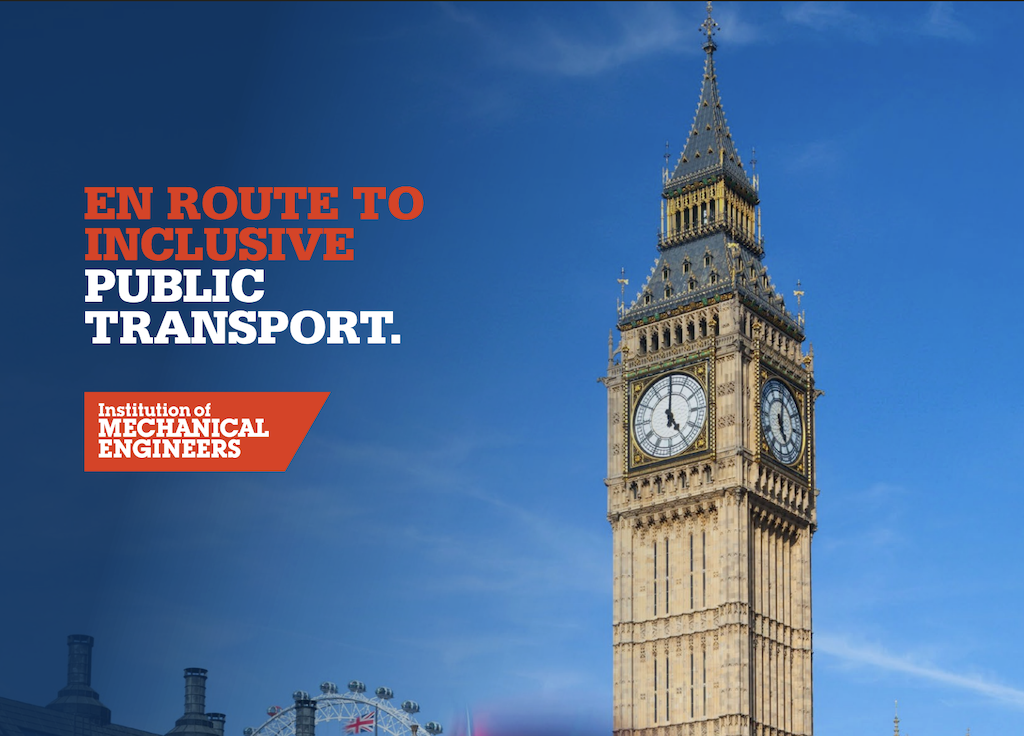
image: IMechE (extract from report cover)
The findings, published as En route to inclusive public transport underline persistent challenges for transport planners and operators seeking to deliver truly inclusive systems.
The study reports that significant segments of the population are unable or discouraged from using public transport because of limitations in physical access, service design and support services. These barriers can affect trip frequency, independence, social participation and access to employment or essential services.
The research points to inconsistent accessibility standards across different transport modes and regions, with some disabled travellers facing repeated difficulties in using buses, trains and trams. It reflects wider evidence that disabled people often encounter:
Physical barriers such as inaccessible stations or vehicles without level access
Operational challenges including unreliable assistance for boarding and alighting
Attitudinal and staffing issues affecting the quality of help received from staff
Rural and service frequency disparities that disproportionately impact people with mobility impairments and older passengers.
Ruth Cadbury MP, House of Commons Transport Select Committee Chair said, “I am delighted to see the Institution of Mechanical Engineers focus its attention on this chronically overlooked subject. Inclusive transport services don’t just benefit the most vulnerable, they make travelling safer, more equitable and more enjoyable for everyone. I look forward to discussing the Institution’s report and its findings on improving the physical environment of transport services, so that inclusivity can become the norm rather than the exception.”
Kahu Te Kani, lead author at the Institution of Mechanical Engineers added, “Many individuals and families face the harsh reality of inaccessible transport every day. The future transport system is already being built, so it must be made with everyone in mind. To tackle systemic challenges—some as old as the infrastructure itself—a whole-system approach is needed, and engineers must be ready to deploy it.”