
Mineral products supplier Tarmac has opened a new asphalt production facility in Northumberland that incorporates innovative sustainable technologies to reduce asphalt-associated carbon emissions and improve the sustainability of infrastructure supply chains across the north east.
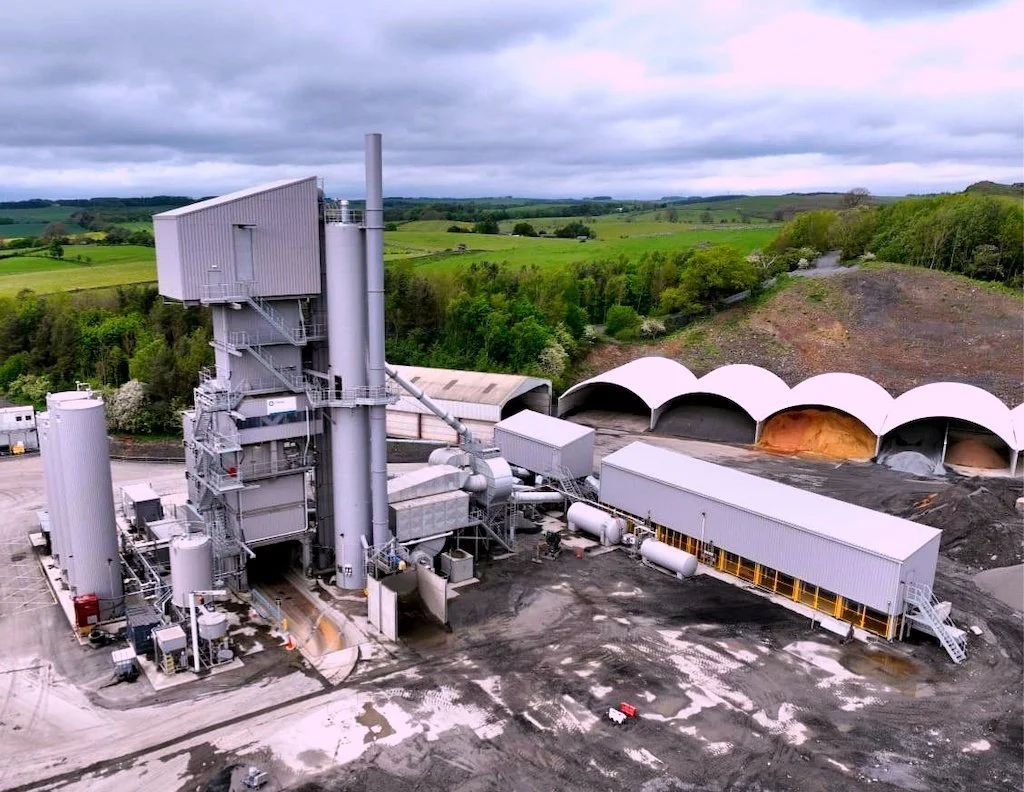
image: Tarmac
The new plant at Barrasford Quarry replaces an older facility on the site and incorporates a range of technologies designed to improve energy efficiency, increase recycled material use and lower operational emissions. According to the company, the site is 35% more efficient than the previous plant and has reduced carbon dioxide emissions by 18%.
The facility has the capacity to incorporate up to 45% recycled asphalt planings into production, reflecting growing industry focus on circular economy principles and material reuse. Tarmac said the plant also includes expanded storage capabilities, allowing for longer production runs and lower energy consumption through fewer shutdown and restart cycles.
Tarmac said the Barrasford plant has been designed to support future fuel transitions through the installation of burners capable of switching to dimethyl ether fuel at a later stage. The company also highlighted the benefits of sourcing aggregates directly from the adjacent quarry via conveyor systems, reducing the need for road transport movements and associated Scope 3 emissions.
Industry attention on sustainable asphalt production has intensified as highways authorities and infrastructure clients increasingly seek lower-carbon solutions for road building and maintenance programmes. Tarmac has previously stated that warm mix asphalt technologies and increased recycled content could play a significant role in reducing emissions associated with road construction.
The Barrasford site has operated for more than four decades and remains part of Tarmac’s wider production network serving customers across the north east. The company said the new facility would support long-term operations at the quarry, where around 20 million tonnes of aggregates remain consented for extraction.