
Transport for London sets out plan to improve transport resilience and cut emissions
Transport for London (TfL) has published an updated Corporate Environment Plan setting out more than 70 actions aimed at reducing emissions, improving climate resilience and making its transport network more reliable.
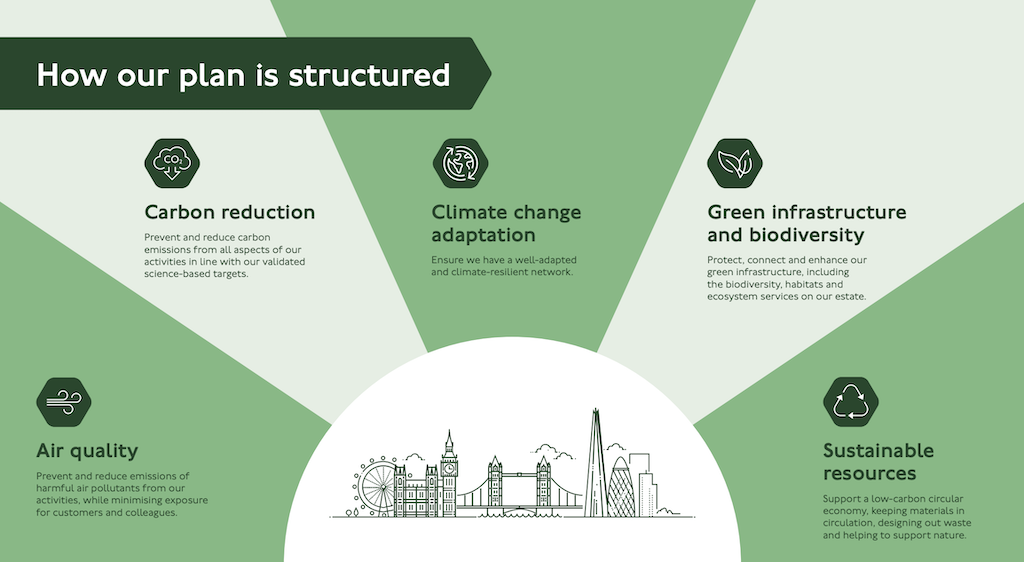
image: TfL (extract from Corporate Environment Plan report)
The 2026 plan builds on TfL's original environment plan, published in 2021, and focuses on adapting the network to more frequent extreme weather while continuing to reduce carbon emissions, improve air quality, increase biodiversity and use resources more efficiently.
Decarbonisation measures include continuing the transition to a zero-emission bus fleet, with more than 3,000 zero-emission buses now operating in London. TfL also plans to connect new solar installations directly to the Underground network and use further renewable electricity contracts to reduce emissions and improve energy security.
TfL is also working with charging operators Zest and TotalEnergies to introduce additional rapid and ultra-rapid electric vehicle charging points. TfL's property company, Places for London, has separately partnered with Fastned on several ultra-rapid charging hubs.
Other measures include greater use of circular economy principles in procurement and project delivery, further conversion of London Underground lighting to LEDs and the introduction of new Piccadilly line trains, which TfL says will be more energy efficient and air-conditioned.
The plan identifies green infrastructure as having a role in providing shade and shelter during extreme weather as well as supporting nature and public health. TfL also plans to maintain 520,000 square metres of wildflower verges across its estate, while continuing work to improve waterways and biodiversity.
Among the measures is a commitment to add at least 10,000 square metres of sustainable drainage systems (SuDS) each year through to 2035. TfL says these systems will help slow the flow of rainwater into drainage networks and reduce flood risk.
TfL says it has already delivered almost 18,000 square metres of SuDS in the last financial year and converted lighting at around 12,000 bus shelters to LEDs. It has also secured validation of its science-based carbon reduction targets and agreed a power purchase agreement with EDF Renewables UK for electricity from a planned solar facility in Essex.