
UK government announces £271m for clean shipping innovation and port infrastructure
The UK government has announced £271m in funding to support the development of low-emission shipping technologies and associated port infrastructure, as part of wider efforts to decarbonise the maritime sector.
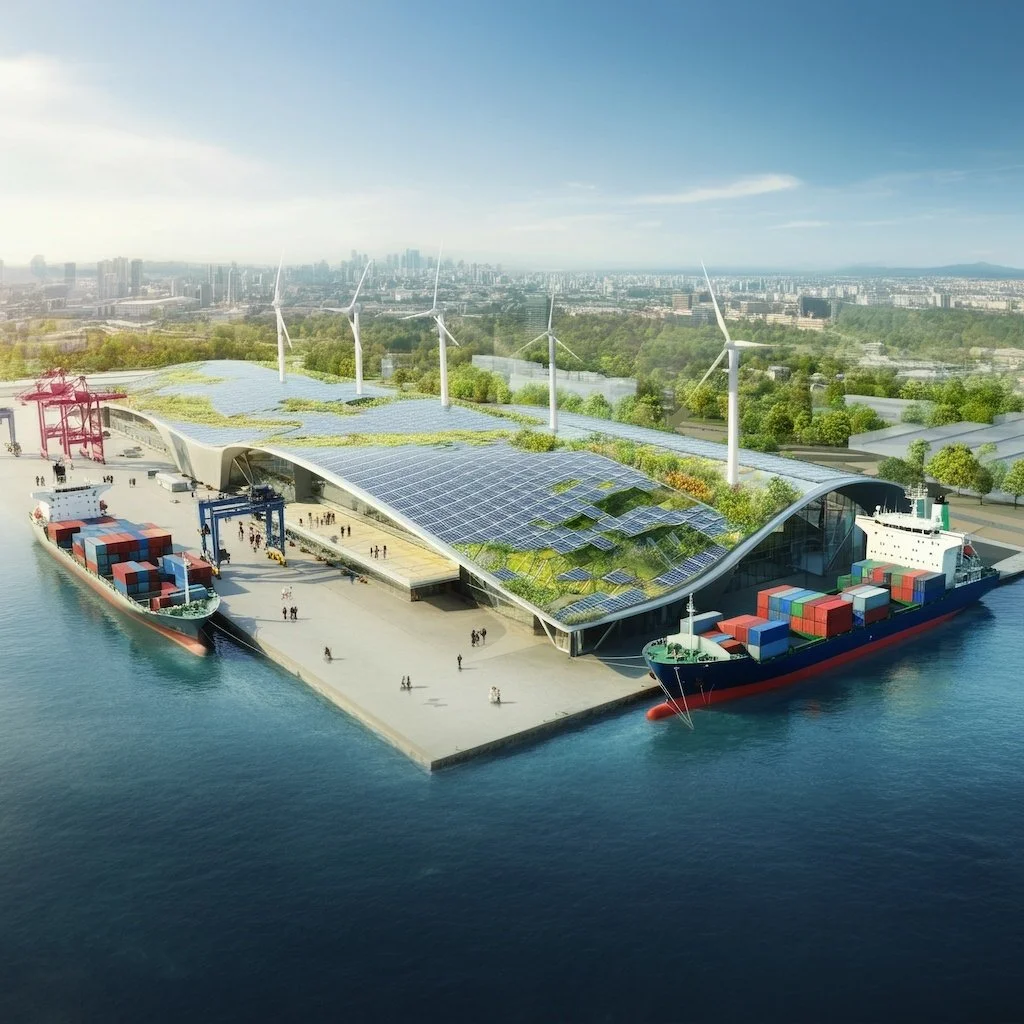
image: Shutterstock (AI generated)
The investment was confirmed by the Department for Transport and Maritime Minister Keir Mather. It forms part of a broader £448m government commitment to clean maritime innovation aimed at supporting employment, attracting private investment and accelerating the transition to low-emission shipping.
The funding will be distributed through two programmes: the seventh round of the Clean Maritime Demonstration Competition (CMDC) and the second round of the Zero Emission Vessels and Infrastructure fund (ZEVI). Both schemes provide grants to companies developing cleaner fuels, vessel technologies and supporting infrastructure intended to reduce greenhouse-gas emissions from maritime transport.
Under the latest announcement, port operators, shipbuilders and maritime technology companies will be able to apply for funding through competitive grant rounds administered with support from Innovate UK.
Applications for CMDC Round 7 will open on 11 March, while ZEVI Round 2 will open on 26 March.
The programmes are intended to support the development and demonstration of technologies such as alternative fuels, zero-emission vessels and shoreside infrastructure including refuelling or charging facilities.
Department for Transport says earlier rounds of funding under the clean maritime programme have supported around 750 new and existing jobs across more than 500 businesses in the UK. Projects have been delivered in coastal locations including Teesport, Leith, Bristol and Hull.
Announcing the funding, Maritime Minister Keir Mather said the investment would support technology development and employment across the UK’s maritime sector. “We’re backing our maritime industries with a further £271m investment to revolutionise technology and infrastructure, supporting skilled jobs across the UK,” he said.