

image: Shutterstock
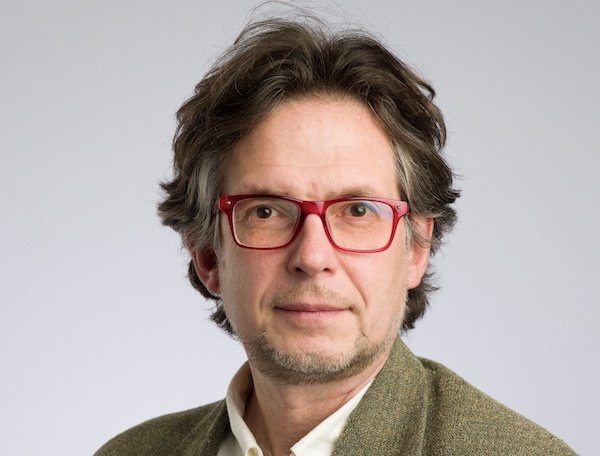
Xavier Brice
Transport’s future will be shaped by more than technological innovation. Xavier Brice of SLR Consulting argues that progress depends on aligning the different timescales of technology, institutions, human needs and long-lived infrastructure – so we can make the right decisions now to deliver lasting economic, environmental and social value
Predicting the future of transport technology is fun — autonomous vehicles, drone deliveries, the totemic allure of flying cars…
But turning technological possibilities into more successful places and lasting economic and human value is harder, because the future of transport depends on four things moving at radically different speeds: technology, the institutions that govern us, our own capabilities and needs as humans, and the infrastructure we’ve inherited.
Four clocks, each ticking at different speeds.
When they are out of sync we end up with stranded investments, missed opportunities, and transport systems that make our lives and places, poorer. When we bring them into alignment, we have opportunities to create lasting value.
And time isn’t on our side. Climate change is forcing us to decarbonise, adapt and renew our infrastructure at a pace our institutions and investment systems struggle to match.
The challenge is to make good decisions across these different timescales, while we can still shape the future.
1. The Technology Clock – rapid, uneven and unpredictable
In 1904, one in three of the novel automobiles on New York's streets were electric. Petrol then displaced them for a century.
We like to talk in terms of technological ages, but in reality, technologies coexist, compete and re-emerge. We are heading towards decades of mixed vehicle technologies, from conventional cars to fully autonomous vehicles.
The future will be messy. Investing against a single vision of progress risks expensive mistakes and stranded assets.
So how do we invest confidently in infrastructure when technological change is so unpredictable, and how much flexibility can we afford?
“The four clocks will never tick at the same speed. Nor should they. But we can make better decisions about how they interact.”
2. The Institutional Clock – always running slow
Institutions provide stability but are remarkably effective at protecting the past. From protecting old technology, to struggling to establish the mechanisms for investing at scale in climate resilient infrastructure.
Europe's automotive industry spent years lobbying to slow the transition away from combustion engines, while China built a formidable electric vehicle industry. You can't lobby away the future.
Nor can we afford to regulate the past. Take the strangling of the postwar railroad industry in the USA, under pressure from air and road but still regulated as if it was a robber-baron led monopoly.
Autonomous vehicles illustrate the challenge. They could turbocharge car dependency, congestion, sprawl, sedentary lifestyles and inequality, or transform accessibility, low-carbon living and safety.
So, how can our institutions get ahead of technological change and climate change, creating the certainty and incentives that unlock investment, and shape the markets and outcomes we want?
3. The Human Clock – both crazy-fast and epochally slow
We absorb new technologies astonishingly quickly – witness a 6-year-old with a smartphone. Yet our fundamental physical, psychological and social needs have evolved over millennia. We need movement, interaction and connection with people and nature.
Imagine autonomous vehicles shuttling us seamlessly between homes, workplaces and leisure destinations. Immersed in our screens we won’t need to interact with anybody or anything outside.
Convenient? Certainly. Desirable? That's another question.
We risk making transport more efficient while making our lives, and our places, poorer. And that's an economic risk as well as a societal one. Transport that undermines health, accessibility and the quality of places may deliver impressive business case metrics but it builds deep-rooted cost for future generations.
How do we ensure transport technology works for humans, creating healthier, greener, more accessible and resilient places, rather than simply more convenient journeys with all their unintended side-effects?
“We risk making transport more efficient while making our lives, and our places, poorer.”
4. The Infrastructure Clock – the steady tick-tock of civilisational time
Infrastructure lasts for generations, millennia even. For all the bombs, gyratories and glass towers the City of London’s shape is rooted in street patterns almost two thousand years old.
But our Victorian railways and too often cheaply-built earthworks face enormous renewal challenges, compounded by climate change and increasingly intensive use. As does the strategic road network, as the pre-stressed concrete of the 1960s reaches the end of its design life.
The financial cost to renew all of this will be staggering. So will the disruption.
Can we afford it? And more importantly, are these the networks we will need?
Every major renewal decision risk embedding today's assumptions into infrastructure that will last for generations — and must withstand a climate very different from the one we used to design for.
Could this wave of renewal become an opportunity to rethink our networks, integrating nature-based infrastructure, with new technologies, changing patterns of living?
“The clocks are ticking. Can we use the time – and investment – we have to build a future worth inheriting?”
Where might the clocks align?
The four clocks will never tick at the same speed. Nor should they. Stability matters, as does innovation. And we cannot change our fundamental human needs or rebuild our infrastructure overnight.
But we can make better decisions about how they interact.
Where technology meets progressive regulation, new markets and investment opportunities can emerge. Where innovation responds to human needs, we can create healthier, more accessible and economically successful places.
And where infrastructure renewal is planned alongside climate adaptation, natural systems, and changing patterns of living we can build resilience while unlocking wider economic and social value.
For planners, place-stewards, infrastructure owners and investors, the challenge is how we recognise and create these moments of alignment. Which decisions should we make now? Where should we preserve flexibility? And where should we challenge the infrastructure and institutions we've inherited?
These are difficult choices, particularly with constrained budgets. But our rapidly changing climate means we cannot wait for the clocks to align of their own accord.
The clocks are ticking. Can we use the time – and investment – we have to build a future worth inheriting?
Xavier is Director of Planning & Sustainable Infrastructure at the global sustainability consultancy, SLR. He is leading SLR’s new Sustainable Place proposition which helps stewards of place shift from asking ‘what asset should I build or maintain?’ to ‘How does the overall system need to perform to achieve the outcomes we want?’
Xavier has spent 25 years leading positive change across different sectors and organisations, with a focus on strategy, sustainability and transport. Most recently he was CEO of the sustainable transport charity, Walk Wheel Cycle Trust (formerly known as Sustrans), before that he held various leadership and advisory roles in Transport for London and the London Mayor’s Office where amongst other things he led the design and delivery of a new operating model for the Underground’s stations, and created the first city’s first walking and cycling strategy. Xavier started his career as an international strategy consultant.
Xavier is a non-executive board member of the UK’s transport regulator, the Office of Rail and Road, and a trustee of Railway Paths Limited. He is also a Fellow of the Chartered Institute of Transport.