
Transport coalition urges Government to accelerate shift to sustainable travel
More than 50 organisations from across the transport, environmental, health and community sectors have called on the Government to take urgent action to increase the use of public transport, walking, wheeling, cycling and shared mobility.
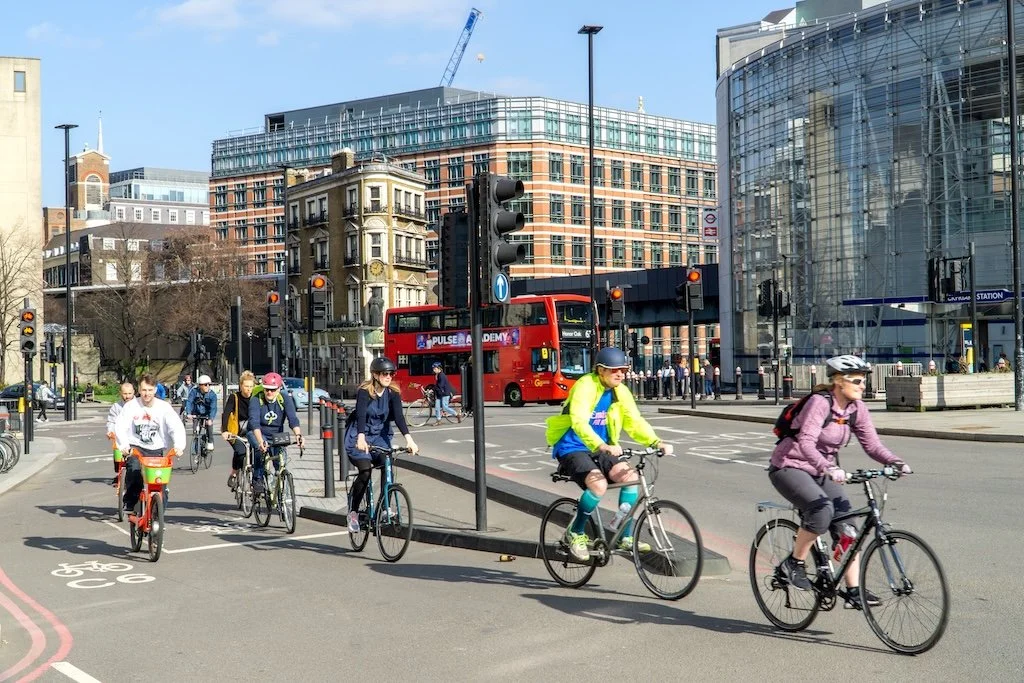
image: Shutterstock
The coalition, coordinated by the Campaign for Better Transport, said this summer’s heatwaves and wildfires had demonstrated the need for stronger action to address transport emissions and improve the resilience of the UK’s transport networks.
The joint statement has been signed by 54 organisations and individuals representing public transport, walking and cycling, shared transport, climate and clean air groups, health organisations, local communities and workers. Signatories include the Chartered Institution of Highways and Transportation (CIHT), ASLEF, Bus Users UK, Cycling UK, Rail Forum, Rail Freight Group, the Royal College of Physicians and the Aviation Environment Federation.
The coalition is calling on the Government to fulfil a commitment made by Labour while in opposition to establish a national trajectory for sustained modal shift, in line with the sustainable transport hierarchy.
It wants to see a greater proportion of journeys made by public transport, shared transport, walking, wheeling and cycling, alongside the Government's existing commitment to a rail freight growth target.
The statement says: “This summer’s heatwaves and wildfires are immediate, real-world manifestations of the climate emergency. The need for action is urgent. Transport is responsible for more carbon emissions than any other sector, so we call on the Government to fulfil the commitment it made in opposition and set a national trajectory for delivering a sustained modal shift in line with the sustainable transport hierarchy, increasing the proportion of journeys made by public transport, shared transport, walking, wheeling and cycling, alongside its commitment to a rail freight growth target.”
It adds that the majority of journeys are under five miles and argues that shifting more of these trips away from private cars would make it easier for people to access shops, schools, health services and family and friends, while also reducing pressure on the NHS and public spending. The coalition also called for the Government to resist calls to delay the transition to electric vehicles and to improve the resilience of transport networks to extreme weather.
Ben Plowden, chief executive of Campaign for Better Transport, said the breadth of support for the statement demonstrated the urgency of the issue.
“That such a range of organisations have come together to make this statement shows the urgent need for stronger action in response to the climate emergency, which has had such a devastating impact on communities across the country this summer,” he said.
“The heatwaves and wildfires, the harm to people, nature and infrastructure, are just a taste of things to come if we do not act urgently.”
Plowden added, “It’s really a question around getting on with the sort of investment primarily in local transport improvements that would allow all of those things to happen simultaneously and as part of the same process.
“And we think that that needs to be driven by central government setting an overall target for enabling people to change how they travel, away from private vehicle use and to be able to choose public transport, walks, cycle, wheeled and shared mobility. And of course obviously increase the uptake of electric vehicles as well.”
The Department for Transport said the Government was focused on giving people greater choice rather than restricting how they travel. “We’re giving people real choice in how they travel by making buses, trains and active travel cheaper, more reliable and easier to access – including lowering the bus fare cap to £2, freezing rail fares, and investing £4.5bn in cycling and walking,” a DfT spokesperson said.
“Rather than restricting how people get around, we’re focused on giving them better alternatives. More broadly, we’re accelerating the UK’s transition to cleaner transport through our ZEV [zero-emission vehicle] mandate, backed by £7.5bn.”
CIHT chief executive Sue Percy CBE said the summer's extreme weather highlighted the need to address both emissions and infrastructure resilience.
“This summer’s extreme weather has shown why climate action and climate resilience must go hand in hand,” she said. “The CIHT has recently published operational guides to dealing with climate disruption and is supporting local authorities with knowledge sharing via a new Highways Resilience and Response Forum. However, we need to tackle the root of the problem which is investing in resilient transport networks that can continue to connect people, places and businesses in the face of increasingly extreme weather.”