
Liverpool hydrogen buses to be converted to battery‑electric amid fuel supply challenges
The Liverpool City Region Combined Authority (LCRCA) has confirmed that its fleet of 20 hydrogen fuel‑cell buses will be converted to battery‑electric operation as part of a wider multi‑million‑pound investment in the region’s zero‑emission bus network. The move comes after hydrogen‑fuel supply issues and utilisation challenges hindered the service of the hydrogen vehicles since their delivery in 2023.
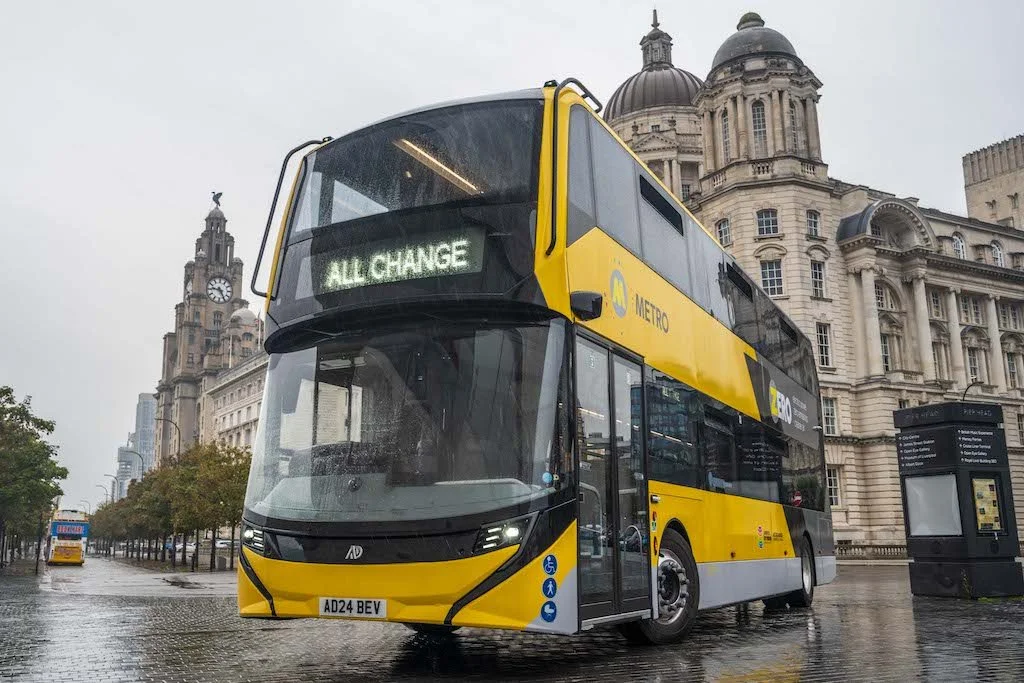
image: Liverpool City Region Combined Authority
The buses – Alexander Dennis Enviro400 FCEV double‑deckers split evenly between Arriva and Stagecoach – have seen limited service. Only the Arriva vehicles carried passengers sporadically, while those operated by Stagecoach “have never been used in anger,” according to local transport reporting. LCRCA said a “thorough review of the hydrogen bus project including global hydrogen supply and pricing” was a key factor in the decision to convert the vehicles.
The switch to battery‑electric technology will supplement over 100 battery‑electric buses already secured by the region under the Transport for City Regions (TCR) funding settlement, which also supports depot upgrades, franchising of bus services and wider fleet renewal. Mayor Steve Rotheram said 2026 will be “the most significant year for transport” in the city region as it modernises services and improves reliability.
The difficulties in sustaining a reliable hydrogen supply reflect broader challenges seen in other cities trialling hydrogen transit vehicles, where fuel availability and cost have constrained operations compared with battery alternatives. Observers have pointed to hydrogen’s less predictable supply chains and higher energy conversion losses as factors that complicate its deployment in urban bus networks.
Despite the shift, LCRCA’s wider strategy remains focused on decarbonising its bus fleet and improving accessibility, reliability and affordability as services transition to franchised operation by 2027. The hydrogen‑to‑battery conversions will be integrated alongside new zero‑emission vehicle procurements as part of that longer‑term transition.