2026 Programme
Core themes
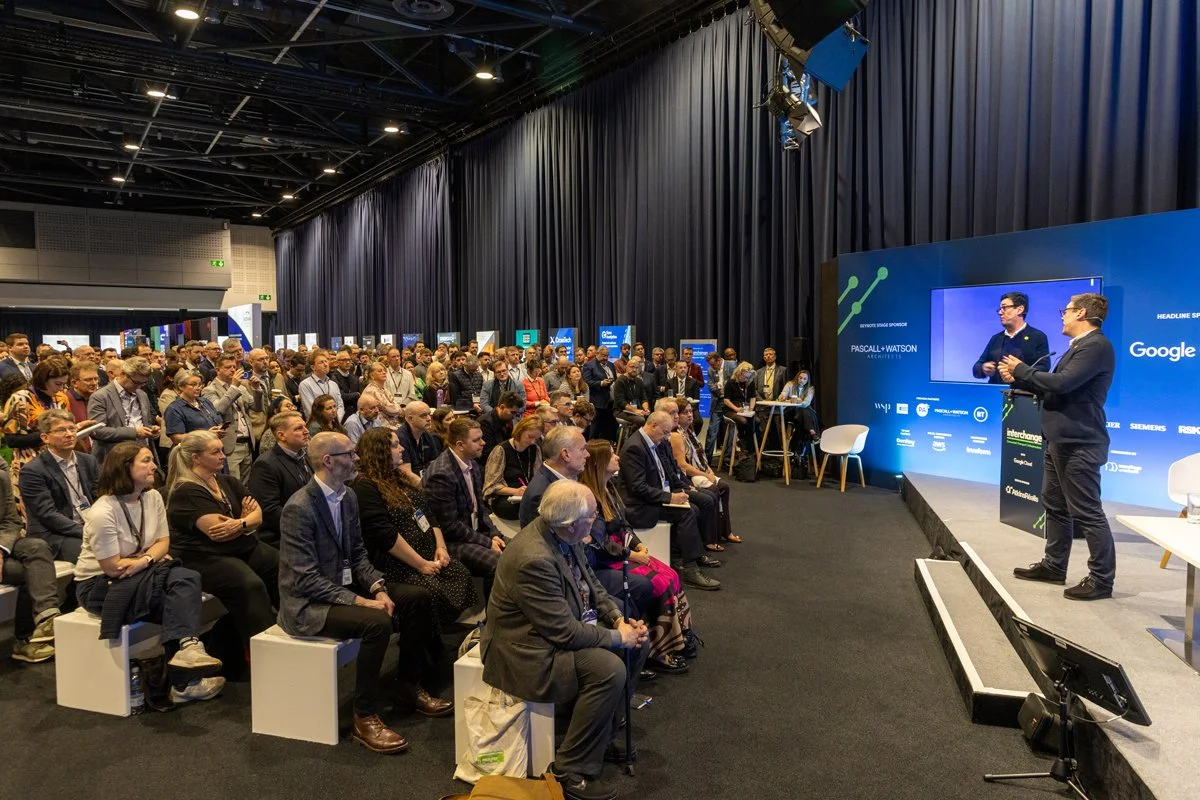
Interchange offers a mutlistream programme, with six theatres running across two days. Taken together it is all about creating a seamless, integrated, decarbonised, and resilient multi-modal transport system that works for people, the economy, and the planet.
Our client-led approach means you can expect to hear from senior figures from across roads, rail, airports and ports.
A particular focus for 2026 is looking at the impact of increasing devolution and the transformative change taking place across city regions. Headline speakers include metro mayors, business leaders, government ministers, and leading academics.
The conference is based around our themeatic pillars of Places, Energy, Environment, and Digital & Data, and new for 2026, the Rethinging stream
Plus, Interchange hosts the ITS UK annual conference over two days, an expanded Partners Theatre, roundtables, and the first-ever Infrastructure Client Group Live event.

Plenary and keynotes
Confirmed speakers include:
Andy Burnham, Mayor of Greater Manchester | Oliver Coppard, Mayor of South Yorkshire | Steve Rotheram, Mayor of Liverpool City Region | David Skaith, Mayor of York and North Yorkshire | Claire Ward, Mayor of the East Midlands | Andy Lord, Commissioner, Transport for London | Isabel Dedring, Global Transport Leader, Arup | Chris Boardman, Commissioner Active Travel England | Sam Rose, Director for Data and Advanced Analytics, Department for Transport | Rachel Skinner, Executive Director for Responsible Business and Government Relations, WSP | Peter Hogg, UK Cities Director, Arcadis and CBI London Council Chair | Professor Sarah Sharples, Dean of Faculty of Science and Engineering, University of Manchester | Thomas Abelman, founder, Freewheeling | Ben Plowden, Chief Executive, Campaign for Better Transport | Vernon Everitt, Transport Commissioner for Manchester and Chair, Transport for Wales | Geraint Evans, Chief Executive, UK Major Ports Group
Rethinking
Exploring bold ideas and innovative approaches to reshape the future of integrated, sustainable, and connected transport systems
Session 1
Integrated settlements
What further devolution is needed to enable evolved systems thinking and resource allocation. This session considers how new governance arrangements will shape investment, coordination, and long-term planning capacity—and explores practical pathways to ensure non-devolved areas aren’t left behind. Invited speakers include: Andrew McIntosh (GMCA)/Chris Barnes (TfGM), Professor Jenny Mindell, Isabel Dedring,
Session 2
Transport devolution and market reform in bus and raIl
What are the opportunities from rail devolution and bus franchising? How are the evolving regulatory frameworks unlocking better service quality, stronger local accountability, and more integrated network outcomes for passengers. Invited speakers include: Alex Hynes (DfT Operator), Simon Elliot (TfGM Network Director Rail), Chris Hegarty (Derby City Council, Pasenger Transport Coordinator), Valerie Davidson (chief exec, Strathclyde Partnership for Tramsport
Session 3
Moving from place-based planning to inclusive people-based planning
How are transport authorities rethinking planning frameworks to put people first, improving mobility outcomes by aligning design, data, and policy with human needs. How Inclusive design is expanding placemaking strategies and 15-minute cities by adding a strong inclusion dimension. Invited speakers include: Marco Te Brömmelstroet,(University of Amsterdam, Professor in Urban Mobility Futures), Caroline Yeng-Ting Cheng (SINTEF), Simone West (TfL, Principal Inclusive Designer), Stephen Cragg (Transport Scotland)
Session 4
Learning from others internationally
International best practice in delivering integrated transport systems, highlighting practical insights that cities and regions can apply to improve connectivity, efficiency, and user experience.
Session 5
Digital innovation
Smarter tech. Sharper services. Real results
Transforming services through digital innovation and deploying digital in the right place and the right time
Places
Exploring how transport drives economic development and shapes thriving communities, this stream examines integrating connectivity with urban regeneration, unlocking economic potential through infrastructure-first, place-led strategies
Session 1, 11.15-12.15, 3 March
Transforming transit: designing connectivity beyond the hub
Transit developments, whether small-scale redevelopment initiatives or part of a larger urban regeneration plan, must be outward-facing and integrated with their surrounding environment. They need to communicate effectively with users, rather than functioning as isolated "hubs". We will explore how planning and design are effectively engaging private landowners and third-party asset holders to drive developments that benefit the local community socially and economically, while remaining practical and functional. Invited organisations include: New River REIT, Avivia Investors, Igloo Regeneration, Platform4
Session 2, 16.15-17.15, 3 March
Employment-led place-shaping: maximising the role of transport hubs
Ports, airports, and rail interchanges can be engines of employment and regeneration—but only when land use, labour demand, movement strategies, and placemaking are planned together. This session examines how to align land, funding, and delivery frameworks to maximise economic growth, improve access to jobs, and create places that work for communities and businesses alike. Invited organisations include Thames Freeport, Liverpool City Region, St Helen’s Borough Council, Triton Big Box, Real Growth Consultancy
Session 3, 13.15-14.15, 4 March
Designing New Towns: Making ‘Infrastructure First’ Real
The next generation of new towns offers both opportunity and challenge. To deliver a sustainable approach to movement it is essential to embed infrastructure and therefore movement habits and behaviours up-front. This session will explore how we can support and deliver adaptable, proportional, sustainable mobility in new communities, through infrastructure-first principles and place-based design. Invited organisations include West Yorkshire Combined Authority, Homes England, Harworth, East West Railhe Places stream look at the positive role that transport – particularly when approached with an integrated transport mindset – plays in creating economically successful and sustainable places that support happier and healthier lifestyles with equitable access to employment, health, education, leisure and nature.
Energy
In a world where there isn’t enough energy and everything is connected, the solution lies in thinking of transport, energy, and the wider built environment as one system —and understanding that interconnection is key to transformation
Session 1, 11.15-12.15, 3 March
Balancing the flow by integrating energy and transport systems
As electrification reshapes both mobility and energy demand, how can we manage load intelligently across transport networks and power grids? This session explores practical tools for balancing flow — from smart charging and storage to real-time coordination between operators — showing how integrated design can deliver resilience and efficiency. Invited organisations include TfL, Network Rail, UKPN, NESO,
Session 2, 14.45-15.45, 3 March
Making it work: financing, business models and collaboration for whole-system outcomes
The future of transport and energy depends as much on governance as on technology. This session dives into how contracts, incentives, and accountability frameworks can be structured to support system-wide goals — aligning public and private interests to deliver shared value, manage risk, and make complex partnerships actually work. Invited organisations include FirstBus, Mitsubishi Financial Group, TfGM, Equans
Session 3, 13.15-14.15, 4 March
What are LTAs trying to achieve and how does this support those goals?
Everything is connected — but what does that mean in practice? Through recent projects and case studies, this session explores the practical application of systems thinking to local transport authorities and how to build truly holistic solutions that reflect the full complexity of the transport and energy systems we manage. Invited organisations include NECA, DfT, other CAs
Environment
Exploring how transport can deliver co-benefits such as lower carbon design, reducing emissions, enhancing biodiversity and boosting wellbeing — and how shifting culture, funding, and partnerships can make these outcomes standard practice
Session 1, 13.15-14.15, 3 March
Co-benefits by design
How can transport projects create value far beyond movement, such as reducing emissions, restoring nature, building climate resilience and improving community wellbeing.
Session 2, 11.00-12.00, 4 March
Do co-benefits unlock new funding pathways
Is the future in maximising value from current funding or using new mechanisms that reward co-benefits like avoided emissions, biodiversity, and health—and can these improve bankability and attract new investors?
Session 3, 14.45-15.45, 4 March
Unlocking co-benefits and removing barriers in practice
Delivering co-benefits is challenging—what must shift in culture, business cases, and cross-sector partnerships to make them the default rather than an optional add-on?he environment stream address the climate resilience of transport systems and the response through infrastructure interventions to the climate and ecological emergencies.
Digital & data
As AI, automation and data-driven tools embed further, attention shifts to scaling what works. Our sessions explore how interoperability, open data and strong governance unlock innovation, how digitalisation creates value for users and operators, and how trust, transparency and cyber-resilience underpin an intelligent transport ecosystem
Session 1, 13.15-14.15, 3 March
How shared data and digital twins enable system-wide optimisation
Insights from practitioners who are applying shared data and digital twin technology to real-world operations. What are the lessons learned in creating digital twins and embedding digital insights into decision-making. How do we ensure the full potential is realised
Session 2, 11.15-12.15, 4 March
Scaling AI from pilots to platforms
What are the barriers to scaling successful AI pilots and how can we ensure interoperability and value capture? Lessons learned from national and city-level deployments
Session 3, 14.45-15.45, 4 March
Cyber safe and resilient by design
As digital connectivity and automation expand, cyber risks increase. This session focuses on building resilient transport systems through cyber safe design, robust governance, and effective risk management.
Sponsor & Exhibit at Interchange 2026
Amplify your presence at Interchange 26 by aligning your brand with our range of sponsorship and exhibition opportunities.