
Glasgow to trial pedestrian-focused ‘People First Zone’ in city centre early 2026
Glasgow City Council has announced a trial of a “People First Zone” on Queen Street and Ingram Street aimed at prioritising pedestrian movement and improving the public realm. Work is scheduled to begin in February 2026 with the redesign of the junction where the two streets meet, creating a fully accessible, step-free crossing point in a high footfall area.
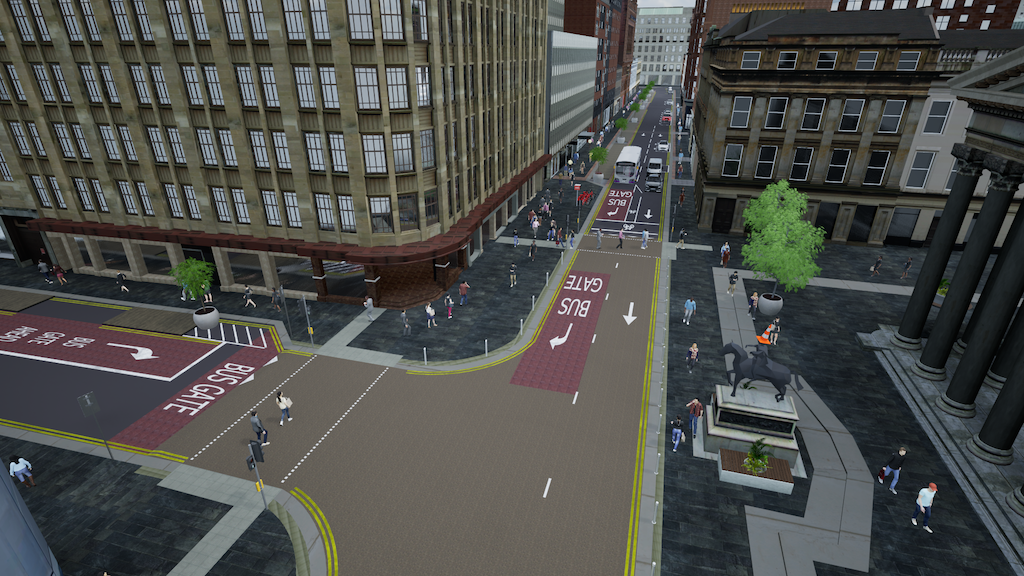
The People First Zone is intended to support the nearby Argyle Street East Avenue project, which is due to start construction in Spring 2026 and will reintroduce a direct west-to-east bus lane on Argyle Street, potentially reducing traffic on surrounding routes.
The council says the trial is part of wider efforts to make city-centre streets more people-friendly while maintaining essential access for services and deliveries.
From March 2026, temporary pavement extensions made from durable materials will be installed along both streets to widen footways and support safer pedestrian movement. The changes will include new parklets and the planting of thirteen street trees to enhance the streetscape.
As part of the trial, Bus and Authorised Vehicle Gates will operate daily between 7 am and 7 pm, allowing only buses, taxis, cyclists, commercial vehicles and other authorised traffic to make right turns between Queen Street and Ingram Street. The council says parking adjustments will see some general on-street parking removed, while all commercial loading bays and disabled parking spaces will be retained.
The initiative will operate under an Experimental Traffic Regulation Order for up to 18 months, during which the council will monitor pedestrian activity, traffic movements and overall impacts. Feedback from residents, businesses and visitors will help inform any future permanent designs.
Cllr Angus Millar, Convener for City Centre Recovery, Transport and Climate said, "This first phase of Glasgow's People First Zone is an opportunity to demonstrate new ideas and see how they work for the thousands of people who use these streets every day.
“By introducing changes on a trial basis, we can safely explore options that create more space and priority for people on foot to create a lower-traffic city centre environment for pedestrians. To deliver high‑quality results from the outset, we've worked with a specialist supplier to design robust, footway extensions, built to withstand heavy use and Glasgow's weather. The upgraded parklets and units use durable materials and construction methods that provide a much more reliable, longer‑lasting solution than earlier temporary features.
“The city centre People First Zone approach is also proposed to be extended to Candleriggs and Wilson Street, complementing ongoing projects such as the George Square redevelopment, the Avenues Programme, and major regeneration projects being delivered throughout the city centre such as at Candleriggs Square."