
Transport integration and being more user-centric starts with the journey, not the network
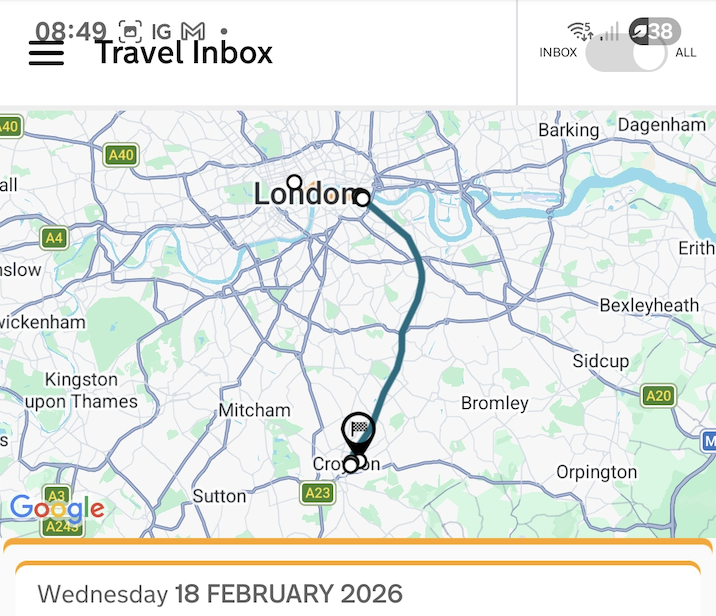
image: TravelAi

Zac Zachariah, CEO, TravelAi
For almost forty years we have tried to integrate transport by aligning services. Timetables synchronised. Ticketing interoperable. Assets mapped and optimised. Yet, says Zac Zachariah, CEO of TravelAi, ask any regular traveller and they will tell you the truth: integration is less a timetable concept and more about lived experiences.
The uncomfortable reality is that we still measure networks better than we measure journeys.
The National Travel Survey (NTS) deserves respect. Since the late 1980s it has been the behavioural backbone of UK transport policy. It is survey royalty. Its continuity is its strength and its constraint. It remains a seven-day recall instrument in a real-time world. Around 400 participants per week provide origin-destination diaries; but short walking links, route waypoints, opportunistic switching and seasonality are all absent.
Meanwhile, Public Transport Authorities commission supplementary studies. Corridor counts. Bespoke modelling inputs. Intercept surveys. NTS data is adjusted and reweighted to fit scheme forecasts. This is not failure, it is fragmentation, a system improvising around suboptimal conditions. Without a persistent behavioural layer linking national evidence to regional modelling, we assemble insight in pieces.
The DfT’s FUSION project, commissioned by its Digital Twins team, tested a different model. Over five months, 3,500 participants generated 13.5 million kilometres of consented, multimodal, time-series data. Eight modes captured automatically across active, private and public transport using TravelAi’s MyWays diary, Yonder Data Solutions nationwide citizen panel and SYSTRA as the project lead.
FUSION spanned disruption including Storm Darragh, capturing behaviour before, during and after events. That is the power of time series evidence that also offers reusability.
The uncomfortable reality is that we still measure networks better than we measure journeys
Multimodal demand data is “sample once, use many times”. A project may begin with one question, but capturing journeys end to end unlocks stacked insights: interchange quality, decarbonisation pathways, accessibility metrics, resilience testing, behaviour change. As the UK invests £500m through its Sovereign AI Unit to build domestic capability, foundational behavioural datasets should be viewed as strategic infrastructure and training data for world models, not project outputs.
The value compounds and exposes texture traditional tools miss. The last 200 to 300 metres that determine whether rail feels connected. The rural traveller blending car and bus. The commuter switching mode mid-disruption. Integration lives in those chains.
If our appraisal frameworks and digital twins are built on partial behavioural inputs, we risk optimising simplified systems. Synthetic assumptions creep in. Benefit-Cost Ratios continue to privilege speed over door-to-door quality. Integration becomes inferred rather than observed.
The next phase of integration is not another control centre or dashboard. It is the institutionalisation of continuous, GDPR-compliant, multimodal behavioural evidence alongside supply-side data. Not to replace the NTS, but to complement it. Not to duplicate PTA work, but to connect it.
Transport is structurally complex. Multiple horizontals, siloed data, fragmented accountability and tight margins. Much of the sector is busy surviving. Yet post-Covid there is an opportunity to reset the relationship with the travelling public.
We have optimised networks for decades. It is time to optimise journeys.
If our appraisal frameworks and digital twins are built on partial behavioural inputs, we risk optimising simplified systems
Join us at Interchange 26 in Manchester
Integrated transport is central to Interchange 26. On Wednesday 04.03.26 at 11am I will share what Interchange 2026 volunteer attendees recorded using our MyWays app. Click here for more information on how to take part. Even a small high-resolution sample reveals patterns averages cannot. I will also be on the Interprise stage Wednesday from 12.40 to 12.55 to dive deeper into what is already possible today.
About the author
Zac is CEO of TravelAi where he leads an amazing team of deep domain experts on a mission to flip the sectors demand-side transport evidence base.