
TfL publishes draft business plan outlining strategic investment to 2030
Transport for London (TfL) has published its draft business plan, detailing a comprehensive programme of investment and service priorities for the capital’s transport network through to 2029/30 as part of what it describes as an “ambitious programme for the future of London’s transport network.”
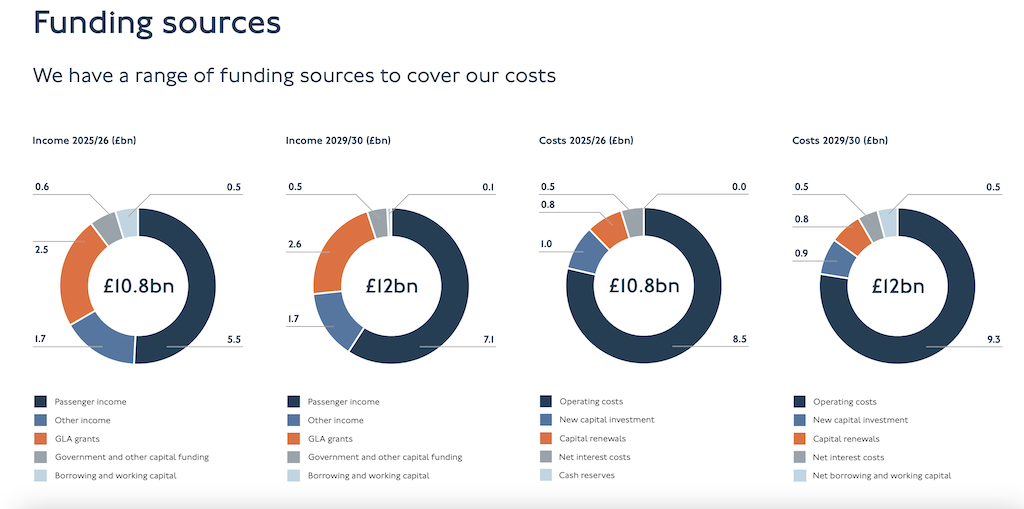
image: TfL
The draft document sets out proposals to enhance public transport, support active travel, improve accessibility and deliver infrastructure upgrades while contributing to economic growth and environmental goals.
The plan outlines how sustained investment across TfL services and infrastructure will build on progress from the last decade, including the introduction of the Night Tube, the Elizabeth line, expanded Cycleways and the largest zero‑emission bus fleet in Western Europe.
It proposes continued development of London’s bus network, with expansion of the Superloop express services, further electrification of the bus fleet and new bus priority measures aimed at cutting journey times and improving reliability. Around two‑thirds of the fleet is expected to be zero emission by the end of the plan period, with a target for the whole fleet to transition as soon as possible thereafter.
Rail improvements feature prominently, with proposals to extend the Docklands Light Railway to Beckton Riverside and Thamesmead and progress plans for new train fleets on the Piccadilly line, the DLR, and additional trains on the Elizabeth line. The plan also includes the complete refurbishment of the Central line fleet and replacement of London’s ageing tram fleet. TfL said these interventions aim to modernise services and support increased capacity across the network.
Investment in roads, congestion reduction and traffic management technologies is also covered in the draft plan, with a new programme of works intended to cut delays and optimise how London’s streets operate over the next five years. The approach includes expanding TfL’s lane rental scheme – which charges companies to carry out disruptive works at peak times – to additional borough roads, alongside signalling upgrades and infrastructure improvements designed to improve traffic flow and safety.
The draft business plan reiterates TfL’s commitment to accessibility, including ongoing work to deliver step‑free access at stations across the network, and to safety programmes such as Vision Zero, TfL’s long‑term strategy to eliminate death and serious injury on London’s roads. The plan also proposes exploring fare innovation and customer loyalty schemes as tools to increase ridership and revenue that can be reinvested in transport services.
London's Transport Commissioner, Andy Lord, said, "Our new Business Plan is an ambitious programme for the future of London's transport network. We have achieved significant progress on the commitments previously made, and this plan lays out our vision for the transport network.
"Our investment will also support the wider London and UK economy, unlocking new homes and jobs through the delivery of new trains and infrastructure, reduced journey times and new innovations. Most importantly - this plan reflects the voices of our customers, businesses and colleagues, who have told us what is most important to them - services that are safe, accessible, frequent, reliable, green and as affordable as possible."
London Mayor Sadiq Khan said he was “hugely proud” of progress to date and that continued investment will support jobs, homes and economic growth, while advancing environmental and inclusion goals across the city.
The draft plan will be considered by the TfL Board on 4 February 2026. The document is available on TfL’s website for public review ahead of final approval.
Andy Lord is speaking at Interchange on 3 March