
Transport investment to underpin Gateshead’s Baltic Quarter regeneration
Plans to regenerate Gateshead’s Baltic Quarter have taken a significant step forward after Gateshead Council signed a pre-development agreement with ECF, a partnership between Muse, Homes England and Legal & General, that could lead to around 1,600 new homes and mixed-use development in the area.
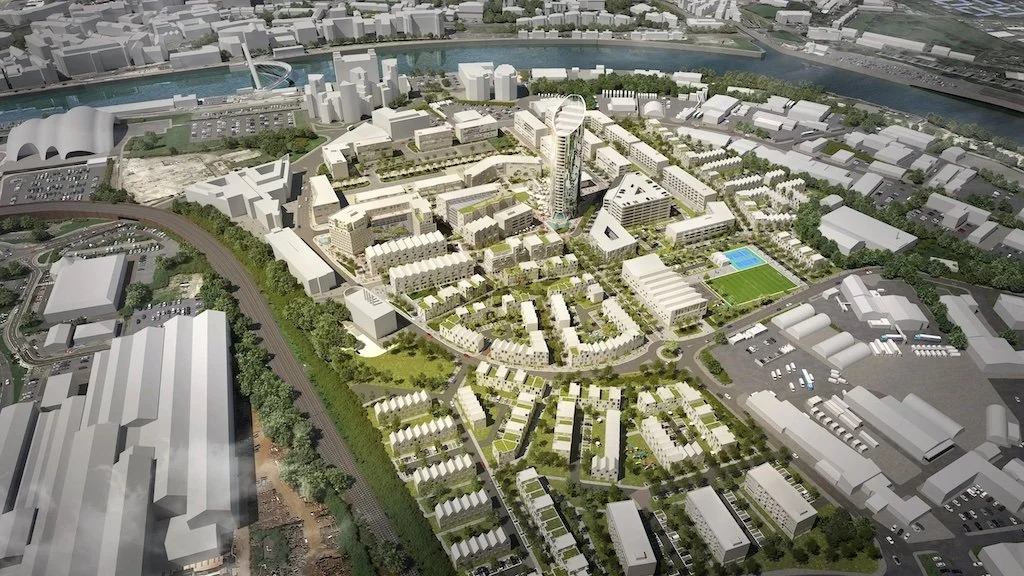
image: Brown+company
Under the agreement ECF will work with the council to shape funding, phasing and delivery of the long-term Baltic Quarter scheme, which is positioned as a key component of the authority’s wider regeneration strategy.
The Baltic Quarter covers around 11 hectares of council-owned land close to the iconic “winking eye” Gateshead Millenium Bridge and is envisioned as a new urban neighbourhood combining homes, workspaces, shops, public spaces and improved connections to adjacent areas including Gateshead town centre and the Quayside cultural quarter.
Improved pedestrian, cycle and public transport connections are seen as critical to unlocking the area’s development potential and supporting long-term growth.
The site has historically been constrained by limited infrastructure and the regeneration programme aims to address these barriers by creating a more permeable street network, enhancing walking and cycling routes and improving links to existing transport corridors.
The pre-development phase will involve masterplanning and early design work, taking into account how new homes and workplaces can be introduced alongside public realm improvements, landscaping, pedestrian and cycle connections, and supporting infrastructure.
Gateshead Council leader Martin Gannon said the agreement marks a “transformational” step for the borough, highlighting the ambition for the site to deliver a mix of housing – including both market-sale and affordable units – as well as public spaces and improved links to neighbouring areas.
Sir Michael Lyons, chair of ECF, said the partnership with the council aims to translate the long-term vision for Baltic Quarter into deliverable proposals while reflecting the borough’s industrial heritage and supporting lasting economic and social value.